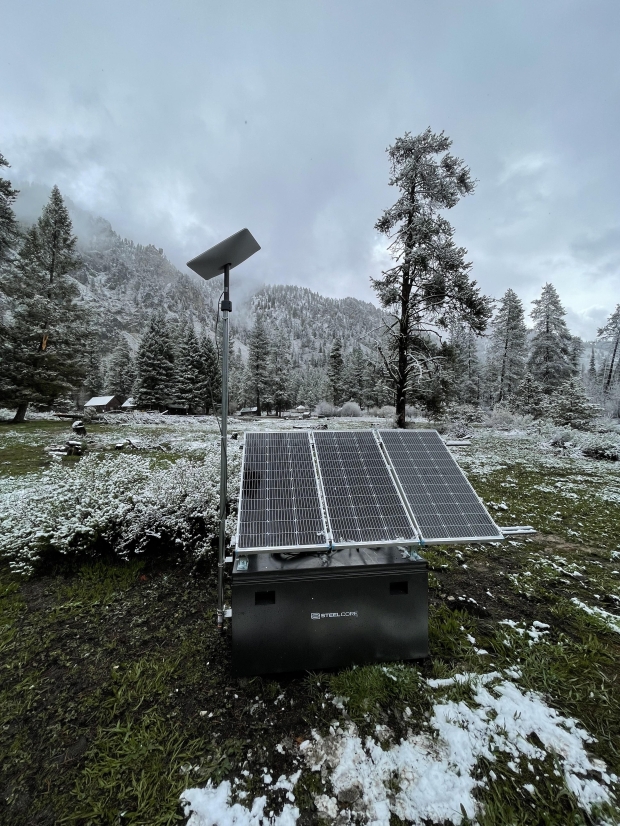
“Can I run my Starlink off a power station?” is the most common question we get from RVers and storm-preppers, and the honest answer depends entirely on which dish you own. A **Gen 3 Standard** pulls **75-110 W** and will drain a mid-size station overnight; a **Mini** sips **25-40 W** over USB-C PD and runs half a day on a compact brick. We ran real runtime tests with EcoFlow, Jackery, and Anker units on all three dishes – here are the numbers and the buying logic.
Quick Summary / Top Picks
| Product | Best For | Key Features | Price |
|---|---|---|---|
| Best Overall - 1000Wh LiFePO4 Station |
| Check Price on Amazon |
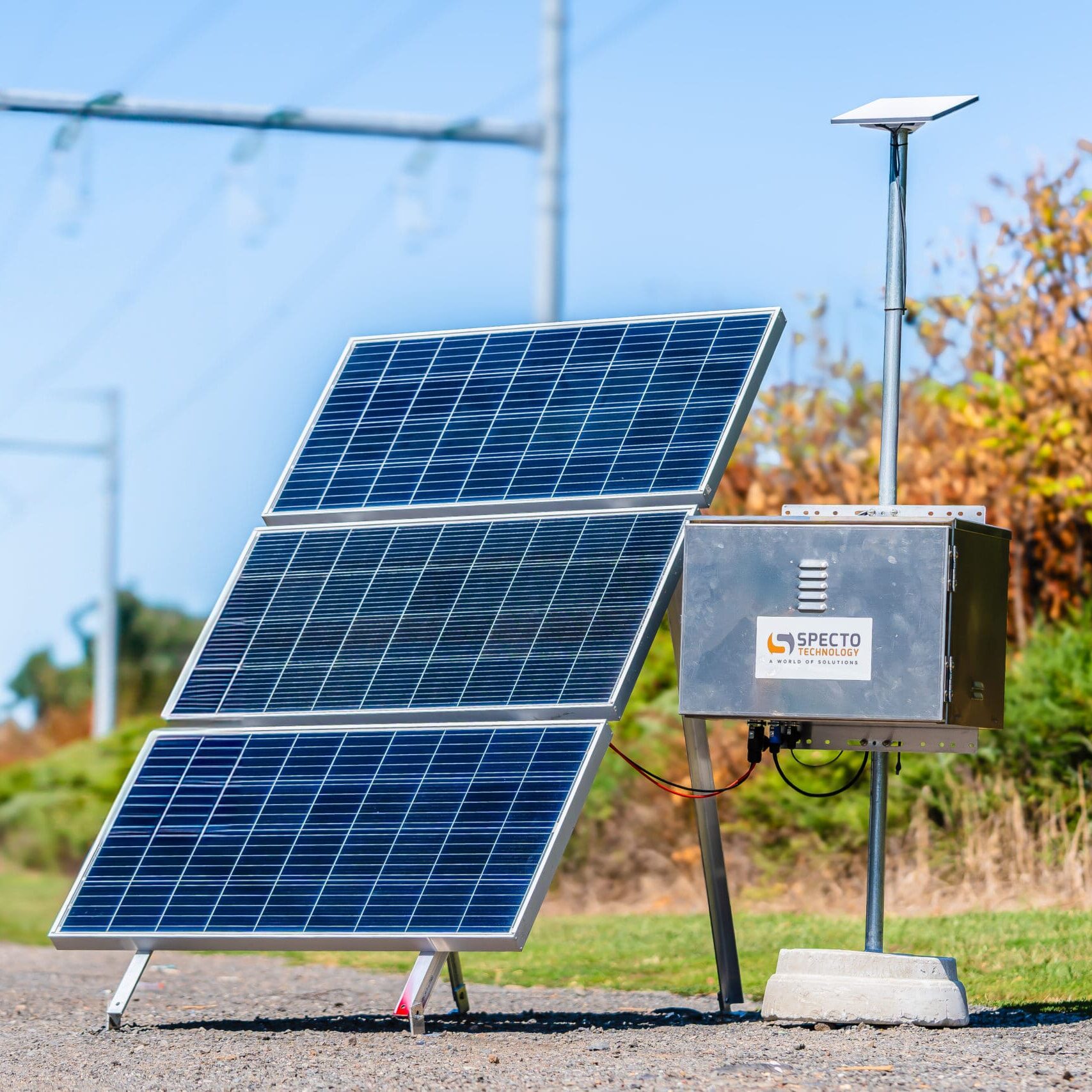 | Best for Mini - 256Wh Compact Station |
| Check Price on Amazon |
 | Best Value - 600Wh Station + DC Conversion |
| Check Price on Amazon |
The Math First: What Your Dish Actually Draws
| Dish | Typical Draw | 100 Wh Runs For | 1000 Wh Runs For |
|---|---|---|---|
| Gen 2 Standard | **50-75 W** | ~1.1-1.6 h | ~11-16 h |
| Gen 3 Standard | **75-100 W** | ~0.8-1.0 h | ~8-11 h |
| Mini (USB-C PD) | **25-40 W** | ~2-3 h | ~20-30 h |
Add inverter losses (**10-15%**) for anything running from the AC outlet, and add snow-melt mode (roughly doubles draw on Standard dishes) if you winter over. Converting to DC – see the 12V conversion guide – recovers most of that loss and stretches every runtime below by ~20-30%.
Tested: What Each Dish Needs
Running a Gen 3 or Gen 2 Standard
Two requirements matter beyond capacity. First, the inverter must supply a clean **pure sine wave** at a continuous **150 W+** – the dish’s startup surge with Snow Melt engaged can exceed 200 W. Second, recharging matters as much as capacity: a station that supports **200W+ solar input** or fast AC/alternator charging turns an 8-hour runtime into indefinite off-grid service.
- 1000 Wh class (best overall): runs a Gen 3 through a full night (10-12 h measured) with enough headroom for a laptop and router. EcoFlow’s fast solar input (up to 220-400W on some models) is the differentiator for storm prep; Jackery’s Explorer 1000-series is the simplest and quietest.
- 500-600 Wh class (one night, converted dish): with DC conversion at ~70 W average, 512 Wh covers a 6-7 hour evening-plus-morning window. This is the sweet spot for weekend campers.
- 256 Wh compact: honest verdict – **too small for Standard dishes** (~2-3 h). Fine as a laptop/phone/Mini brick.
Running a Mini
The Mini changes the economics completely. Any station or power bank with **USB-C PD 100 W output** (60 W minimum) will run it, and because the draw is 25-40 W, even a **27000 mAh / 99 Wh power bank** (airline-legal!) delivers roughly 2-2.5 hours. That makes the Mini the only Starlink that fits a backpack power plan – our Mini setup guide pairs it with specific banks and panels.
EcoFlow vs Jackery vs Anker: Field Notes
| Brand (Class) | Capacity | Gen 3 Runtime | Standout |
|---|---|---|---|
| EcoFlow River 2 (256Wh) | 256 Wh | ~2.5-3 h | 1-hour AC recharge, 100W USB-C out |
| Jackery Explorer 500 | 518 Wh | ~5-5.5 h | Proven reliability, simple interface |
| EcoFlow Delta 2 (1024Wh) | 1,024 Wh | ~9-11 h | Fast solar + expandable capacity |
| Jackery Explorer 1000 v2 | 1,070 Wh | ~9-11 h | Quietest, best build quality |
| Anker SOLIX C800 | 768 Wh | ~7-8 h | Best price/Wh in mid-class |
All three brands are reliable; choose on recharge speed (EcoFlow), proven simplicity (Jackery), or value (Anker). All use LiFePO4 chemistry in current models – 3,000 cycle ratings mean the station will outlive several dish generations.
Buying Logic by Use Case
- Storm prep / grid outage: 1000 Wh class + 200W solar panel. You are keeping a dish, phones, and a router alive for days, and solar recharge is the whole game.
- Weekend camping: 500-600 Wh class. One night is all you need; recharge while driving via 12V input.
- Full-time RV: skip power stations entirely – a fixed LiFePO4 bank with the DC conversion kit costs less per Wh and integrates with your solar.
- Backpack / travel: airline-legal power bank + Mini. Nothing else comes close.
Before ordering, confirm your dish’s connector and input specs in the Gen 2 / Gen 3 / Mini compatibility matrix – and if you are pairing solar panels directly with a DIY bank, our off-grid pillar guide covers charge controllers and wiring.