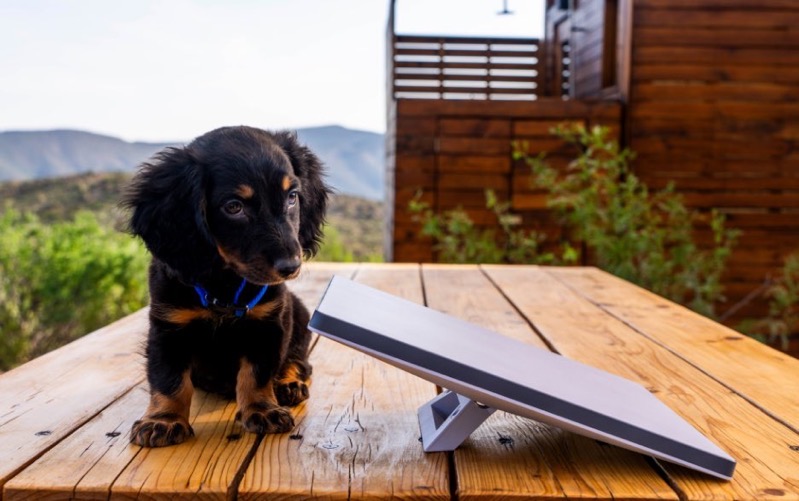
The Mini is the Starlink that finally fits a backpack – **2.7 lb**, roughly **11.4 x 9.8 in**, with its own router, kickstand, and a USB-C power input. That last detail changes everything: instead of inverters and proprietary cables, the entire power system is a USB-C Power Delivery charger and a battery bank. This guide covers the lightest mounting hardware that works, the power banks that actually sustain it, and the packing list we use for backcountry trips.
Quick Summary / Top Picks
| Product | Best For | Key Features | Price |
|---|---|---|---|
| Best Overall - Tripod + Ball Head Adapter |
| Check Price on Amazon |
 | Best for Vehicles - Magnetic Base |
| Check Price on Amazon |
 | Best Power - 100W PD Power Bank (27k mAh) |
| Check Price on Amazon |
Power First: The Mini’s One Non-Negotiable
The Mini requires **60 W minimum over USB-C PD** and runs best on **100 W (20V/5A)**. Real consumption is **25-40 W** typical – the headroom is for startup surges and snow-melt mode. What this means when shopping:
- Power banks: must advertise **PD 100 W output** (or 60 W minimum). A 30W “fast charge” bank will not boot the dish. A 27000 mAh / 99 Wh bank is **airline-legal** and delivers roughly 2-2.5 hours of service.
- Vehicles: a 12V-socket USB-C PD 100W adapter (~$20-30) runs it indefinitely while driving. Wire details in the 12V conversion guide.
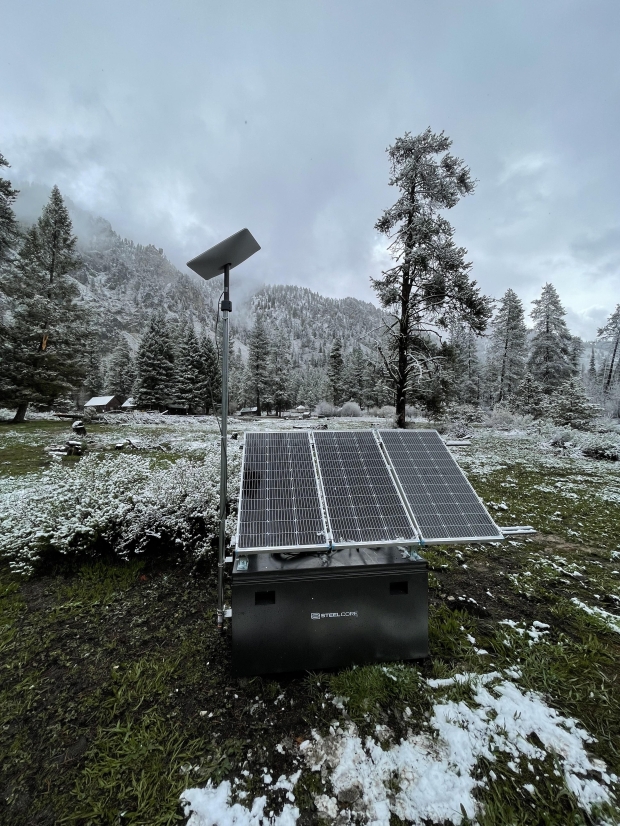
- Solar: any 60W+ PD panel charges or powers it directly in sun. The Mini + a folding panel is the most self-sufficient connectivity kit we have tested.
Mounting: Light Hardware Only
Tripod Adapters (The Default Choice)
The Mini’s kickstand pivot accepts small aftermarket adapters, and the general-purpose route is a **1/4-20 camera tripod mount** – the Mini is light enough that any travel tripod or even a mini tabletop tripod holds it rock-steady. Aim manually using the app’s obstruction checker; the whole process takes under a minute once you know your site’s sky direction.
Magnetic Bases
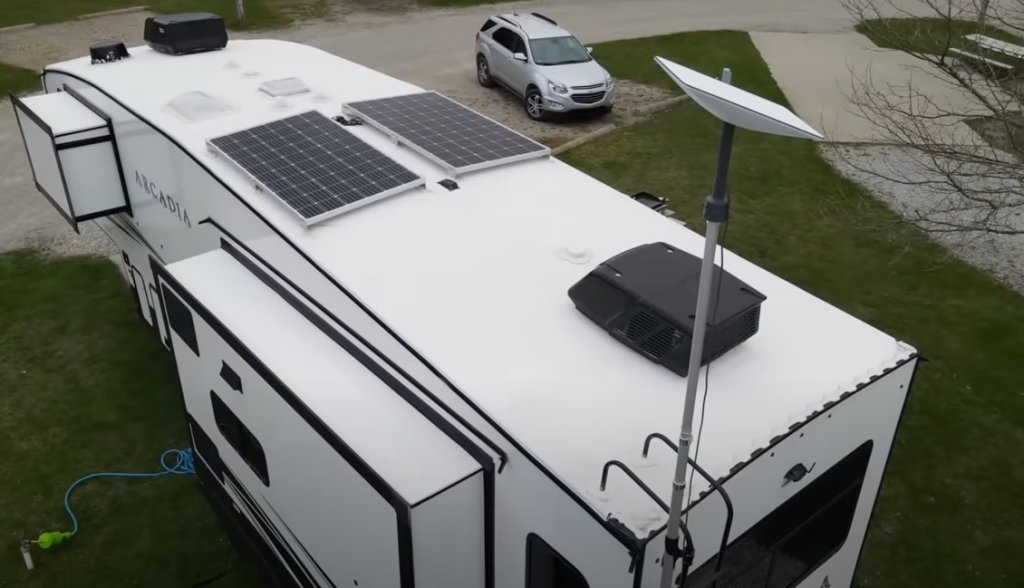
On a steel vehicle roof or hood, a **65+ lb pull** magnetic base is the fastest deploy in satellite internet: stick, aim, connect. It is a parked-only solution – never drive with the dish on a magnet, and take it down in wind advisories. Still, for road-trip stops it beats tripod setup on speed.
Small Rail and Suction Clamps
Suction window mounts work through glass but cost **20-40% throughput**; rail clamps sized for camera gear grip kayak racks, awning arms, and fence posts. Anything rated for a mirrorless camera (roughly 5+ lb) exceeds the Mini’s needs – the constraint is always the Mini’s kickstand interface, not clamp strength.
Weather Protection
The Mini is weather-resistant for operation but not for storage: in sustained rain, angle it so the cable entry faces down, and bring it inside overnight. A **compact hard case** sized for the dish plus a power bank and cables makes the complete kit **under 8 lb** and airline-safe.
Field Testing Notes
| Scenario | Setup Time | Result |
|---|---|---|
| Mountain pass, tripod on rock | ~2 min | Full service, 130+ Mbps down |
| Forest campsite (partial canopy) | ~4 min | Usable, periodic obstructions during gusts |
| Vehicle hood, magnet base | ~45 sec | Full service; retrieved before driving |
| Through windshield glass | ~30 sec | ~30% throughput loss, frequent retries |
The Backcountry Packing List
- Mini dish + its kickstand (built-in)
- **100W PD power bank**, 27000 mAh class – airline legal
- Travel tripod with ball head (or magnet base for vehicle trips)
- USB-C cables x2 (100W e-marked – cheap cables are the #1 field failure)
- Optional: 60-100W folding PD solar panel
- Hard case with foam cutouts
How the Mini’s interfaces compare with the Standard dishes is in the Gen 2 / Gen 3 / Mini compatibility matrix; if you need fixed-install power planning for a Mini at a cabin, the off-grid pillar guide covers battery and solar sizing.