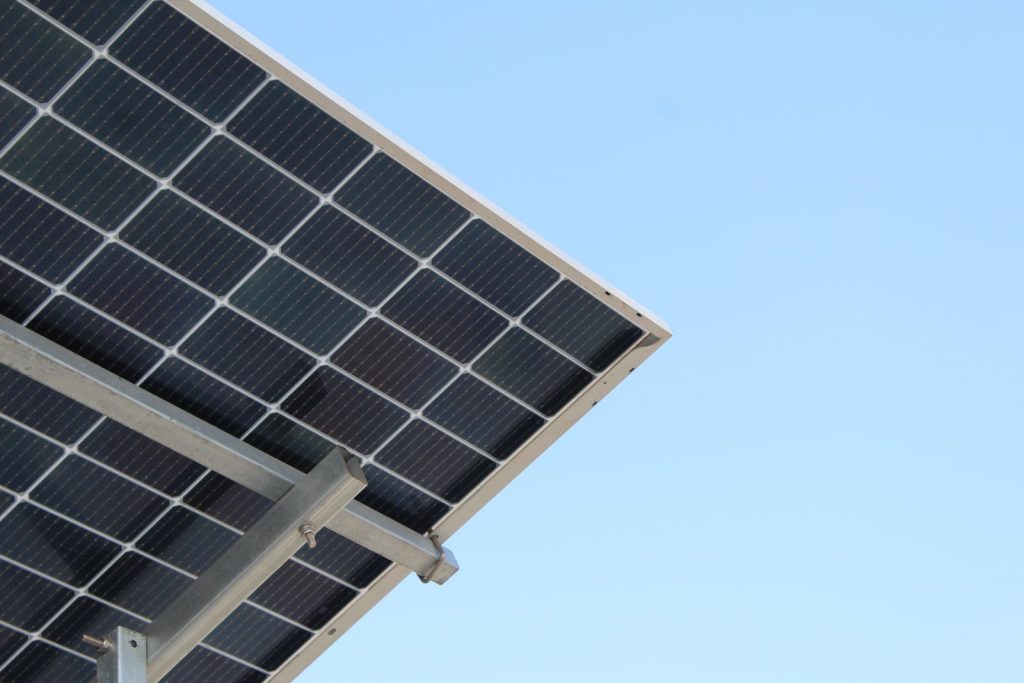
Every solar panel is sold at its best moment. The rating is taken at a fixed light intensity, a fixed cell temperature, and a sun angle that exists for about forty minutes a day in June. Everything after that is negotiation with weather, latitude, and the shadow of your own chimney.
So when someone asks how many watts of panel they need to keep a Starlink running, the useful answer is not a number. It is a method, plus a warning that the method usually produces a bigger array than people expect. Off-grid Starlink on solar is not a small project once you want it to work in December.
Here is how we size these systems now, after building a few that were too small and one that was embarrassingly too large.
A panel rating is a laboratory number, not a harvest
Take the nameplate figure and cut it. In real conditions with a clear sky and a panel pointed properly, you might see seventy to eighty percent of the rated wattage at midday. Add heat — a black panel in the sun gets hot, and hot cells make less power — and you lose a few more percent. Haze, thin cloud, and a low sun angle take more.
Then multiply by hours. A 200W panel does not make 200W for eight hours; it makes a curve that rises, peaks for an hour or two, and falls. In summer at a middling latitude you might harvest the equivalent of five good hours. In winter, two or three, and one of those is weak.
The number you actually care about is daily watt hours, and the only reliable way to get it is to measure your own site. A cheap meter on the panel output for a week in the worst month will tell you more than any calculator that assumes a clear sky.
Matching the array to what the station will accept
This is where money gets wasted. Most portable power stations have a hard cap on solar input — a maximum wattage, a maximum voltage, and a maximum current. Panels beyond that cap are not just unnecessary, they are dead weight, because the station will clip the input and the extra capacity goes nowhere.
Read the input window carefully. If the station accepts up to a certain voltage and your panels in series exceed it, you have a problem that ranges from a refused charge to a damaged input stage. Panels in parallel keep the voltage down and the current up; series does the opposite. Get this wrong and the system either underperforms or stops working.
There is also a mismatch between what the station’s built-in controller can do and what a good external controller can do. Built-in inputs are usually fine and rarely excellent. On a permanent install with a separate battery bank, a proper MPPT controller will out-harvest the station’s internal one by a margin worth having. On a portable setup, the internal one is the right call because it is one less box to wire in the rain.
Working backward from daily watt hours
Start with consumption, not production. A dish averaging thirty watts around the clock is 720 watt hours a day. That is a lot. It is more than most 500Wh stations hold, which means a solar array is not topping up a battery on this load — it is carrying the whole thing while also refilling what the night took.
Now size the array. Divide daily need by the harvest hours for your worst month, then divide again by the derate factor. Seven hundred and twenty watt hours, three winter hours, seventy percent — that lands near 340 watts of panel. In summer the same array would be comfortably oversized, which is exactly the right way to be wrong.
That result explains why so many off-grid Starlink installs disappoint. People buy a 100W folding panel, point it at the sky, and expect it to keep a dish alive. It will not. It will slow the drain, which feels like progress until the third cloudy day.
| Product | Best For | Key Features | Price |
|---|---|---|---|
 |
200W Folding Panel |
|
Check Price on Amazon |
 |
MC4 Extension Cable |
|
Check Price on Amazon |
 |
Solar Panel Tilt Mount |
|
Check Price on Amazon |
 |
MPPT Charge Controller |
|
Check Price on Amazon |
 |
Solar Cable Entry Plate |
|
Check Price on Amazon |
1. 200W Folding Panel
Two hundred watts in a folding format is the sweet spot for a portable station, because it is about the most one person can carry and set up without help. Beyond that, the panel gets heavy enough that you stop moving it, and a panel you stop moving is a panel making half of what it could.
Cell quality shows up in low light more than in full sun. Two panels rated the same will behave very differently at seven in the morning or under thin overcast, and the spec sheet will not tell you which is which. Reviews from people at your latitude are worth more than the efficiency number.
Adjustable legs matter more than the carry case. A panel flat on the ground at a low sun angle loses a large fraction of its output, and legs that let you tilt toward the sun recover most of it. If the legs are flimsy, the panel will lie flat after the first gust.
See 200W folding solar panels on Amazon →
2. MC4 Extension Cable
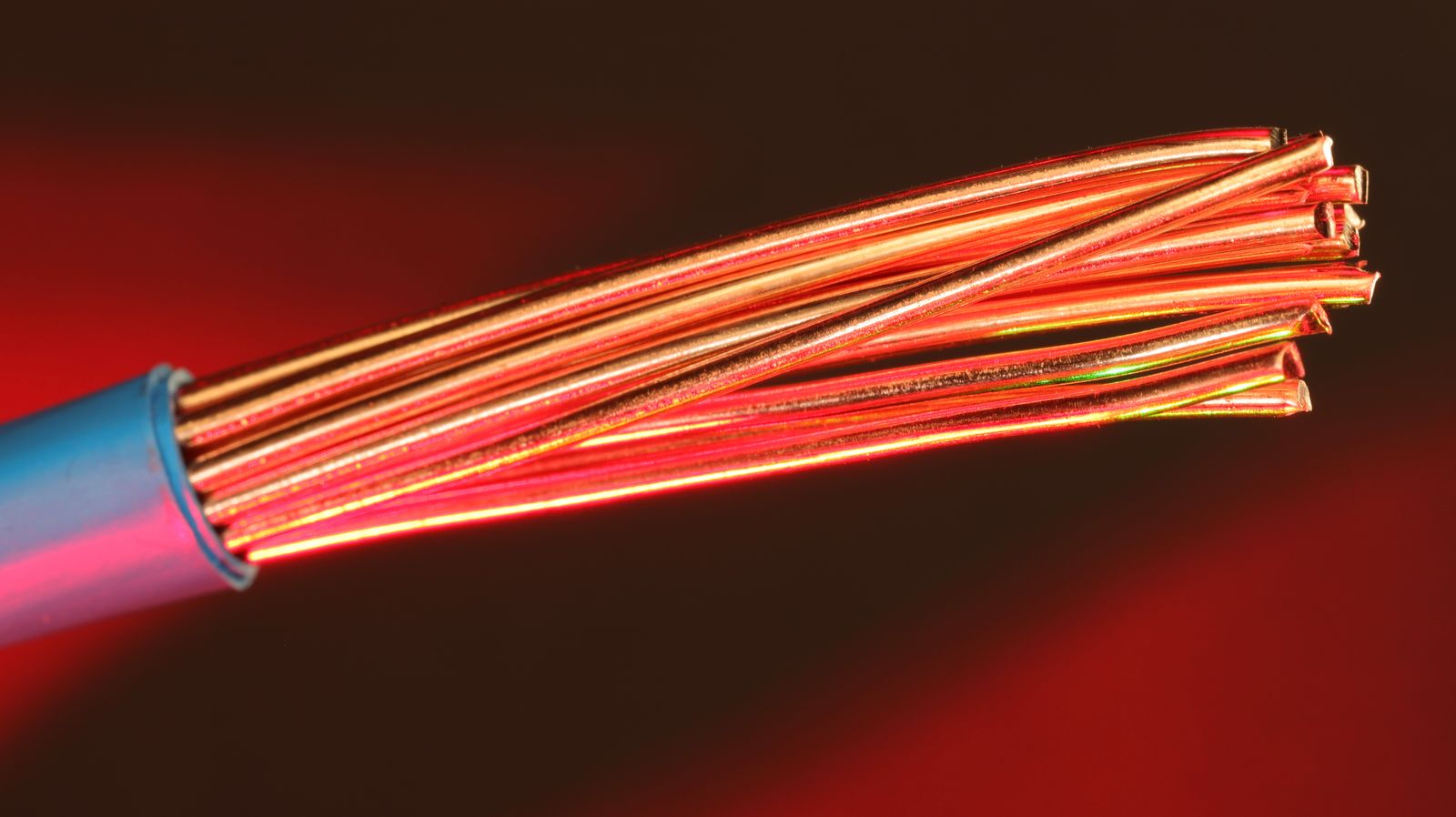
The distance between where the sun is and where the battery sits is usually longer than the cable that came in the box. Extension leads solve that, and the gauge is what determines whether you solved it or just moved the loss somewhere less visible.
Ten AWG is the right default for runs of any length at panel voltages. Thin cable on a long run drops voltage, and since a panel’s power is the product of volts and amps, dropping volts is dropping watts. On a low-voltage array this is not a rounding error.
Check the connectors before the first trip. Pre-crimped ends vary a lot in quality, and a loose MC4 joint will arc, heat, and eventually carbonize. Give each one a firm pull. If it moves, re-crimp it or replace the lead, because the failure mode outdoors is a melted connector and a scorched panel frame.
See 10 AWG MC4 extension cables on Amazon →
3. Solar Panel Tilt Mount
A tilt mount is the cheapest wattage you will ever buy. Angle a panel toward the winter sun and you can recover a third of the output you were losing to a flat orientation, without spending anything on more cells.
For a ground setup, look for a frame that locks at several angles rather than one that relies on friction. Friction joints slip under wind load and you end up with a panel pointing at the horizon in the middle of the day, which is the one direction that produces nothing.
For a roof or shed, the same bracket works but the calculation changes. A shallow fixed pitch is fine in summer and poor in winter, and if the roof faces the wrong way, no bracket fixes it. Walk outside in December and look at where the sun actually is before you drill.
See solar panel tilt mounts on Amazon →
4. MPPT Charge Controller
If you are charging a battery bank rather than a sealed power station, the controller is where the system earns or loses its harvest. MPPT tracks the panel’s best operating point as light and temperature move, and on a cold bright day that is worth a real percentage over a cheap PWM unit.
Buy for the current you will run, with margin. A 40A controller on a small array is loafing, which is fine — it runs cooler and lasts longer. Undersized controllers clip on the best days, which are precisely the days you were counting on.
Temperature compensation is not a gimmick. Lead and lithium both want different charge voltages as they get cold, and a controller with a sensor will treat a winter bank better than one guessing at room temperature. If the sensor is optional, fit it.
See 40A MPPT charge controllers on Amazon →
5. Solar Cable Entry Plate
Every permanent array eventually has to get its cable through a roof or a wall, and that hole is where the water gets in. A proper entry plate is a molded body with glands and a screw-down cover, and it costs less than the repair you would otherwise be doing in two years.
Mount it on a vertical surface when you can, or on the sunny side of a slope where snow will not sit against it. Cable should enter from below with a drip loop, so water runs off the wire instead of following it into the gland.
Seal the flange, not just the screws. A bead of flexible sealant under the plate, then screws through it, gives you a gasket that moves with the surface. Rigid sealant over the top of everything looks tidy and cracks in the first hard freeze.
See solar cable entry plates on Amazon →
Where solar sizing goes sideways
The first error is sizing for June. An array that keeps up beautifully in summer can be at a third of that in December, and December is when you actually need the dish because the days are short and the weather is bad. Size for the worst month and accept the waste in the best one.
The second is ignoring the station’s input ceiling. We have watched people bolt three panels onto a station that clips at a fixed wattage and then wonder why the extra panel changed nothing. Read the input spec first. It is the cheapest mistake to avoid and the most common one we see.
The third is flat-mounting and forgetting. A panel lying horizontal collects dust, bird lime, and a thin film of pollen that quietly costs you double-digit percentages. Ten minutes with a cloth and a bucket once a week is worth more than an upgrade.
FAQ
How many watts do I need to run Starlink around the clock on solar? For a dish averaging around thirty watts, plan on several hundred watts of panel plus a battery big enough to carry the night. The exact figure depends on your winter sun hours, and that is the number worth measuring rather than guessing.
Can I mix panels of different sizes? On separate controllers, yes. On one controller, only if they are in parallel and facing the same way, and even then the weaker panel drags the pair down. Two identical panels beat one big and one small every time.
Do I need an external controller if my station has a solar input? No, and adding one in line will usually confuse the station’s charging logic. Use the built-in input for a portable setup. Save the external MPPT for a system with a separate battery bank and a controller that owns the whole charge profile.
Bottom line
Size from daily watt hours, divide by the harvest hours of your worst month, and derate hard. That arithmetic almost always produces a bigger array than the one you were about to buy, and the number it produces is the one that keeps working in February.
Then buy panels you can actually aim, cable thick enough to carry the current, and a controller with headroom. Solar on a Starlink is not hard. It is just unforgiving of optimism, and the people who are happiest with their systems are the ones who planned for the gray week instead of the bright one.